
Struggling with negative user feedback about noise or a "cheap feel" on your new device? The hidden culprit is often the micro pump, a component whose performance directly impacts user perception and brand reputation.
A device’s user experience is heavily influenced by its internal micro pump. The pump’s noise, vibration, stability, heat, and lifespan are not just technical specs; they are tangible qualities that users feel and hear, directly affecting their perception of your product’s quality, safety, and reliability.

Throughout my career as a project manager for OEM devices, I’ve seen countless projects succeed or fail based on this one component. A well-chosen pump operates invisibly, supporting a premium experience. A poorly chosen pump announces its presence in the worst ways, undermining even the best product design. Let’s dive deep into exactly how this hidden component can make or break your brand, one user experience at a time.
Why Should OEM Buyers Care About User Experience When Selecting a Micro Pump?
Are your engineers choosing pumps based on datasheets alone? This common mistake ignores that users don’t experience specs; they experience the physical output of that component, which becomes a core feature of your product.
OEM buyers should care because a pump’s performance is directly felt by the end user as noise, vibration, instability, or heat. These "features" directly shape the user’s perception of product quality and brand trustworthiness, ultimately impacting sales, reviews, and after-sales costs.
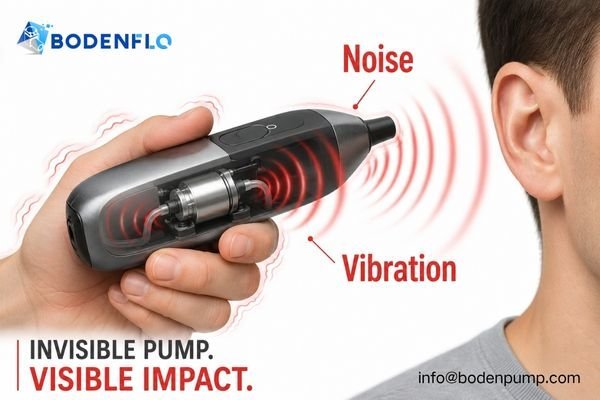
In every project kickoff, I emphasize that the pump is invisible, but its impact is profoundly visible. When you prioritize initial cost over user-centric performance, you unintentionally engineer negative features directly into your product. Users will notice, and they will complain. They will experience:
- Irritating Noise: A constant whine or hum that immediately cheapens the product.
- Unsettling Vibration: A buzz that makes a handheld device feel uncomfortable and imprecise.
- Unstable Performance: Inconsistent pressure or flow that makes the product feel unreliable.
- Sluggish Response: A frustrating lag between a user’s action and the device’s reaction.
- Alarming Heat: A warm casing that raises immediate concerns about safety.
- Premature Failure: The device stops working, completely destroying brand trust.
These aren’t component problems; they are brand problems that start with the pump.
How Does Pump Noise Affect Product Perception?
Your beautifully designed product is getting complaints about a "cheap, whining sound." That’s the sound of a poor pump choice destroying your brand’s perceived value, one decibel at a time.
A noisy pump instantly degrades a product’s perceived quality, making it feel cheap, unprofessional, or even defective. This is especially damaging in medical and beauty devices where quiet operation is linked to safety and premium value, and the noise can be amplified by the device’s own housing.
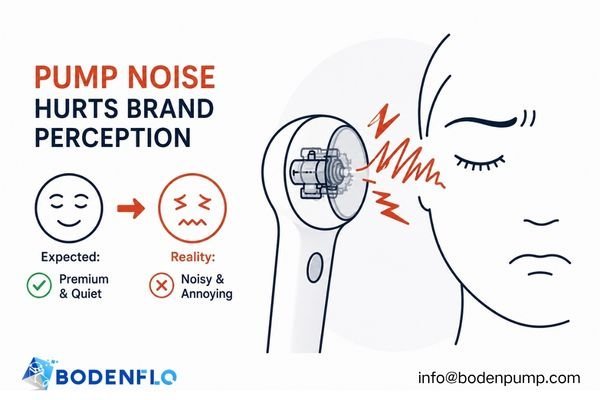
Let’s dive deeper. The problem of noise is rarely as simple as the spec sheet suggests. Here’s what I’ve seen happen repeatedly:
- The Datasheet Trap: Teams select a pump based on a decibel (dB) rating measured in an ideal, open-air environment. This number is often misleading.
- The Resonance Effect: Once that "quiet" pump is placed inside a hollow plastic product enclosure, the housing acts like a speaker, amplifying the noise and creating an annoying, high-pitched whine.1
- The High-Stakes Impact: This is a critical design flaw in noise-sensitive applications, including:
- Beauty Instruments: Where noise near the face is intrusive and signals poor quality.
- Medical Devices: Where quiet operation conveys a sense of professionalism and safety.
- Smart Home Appliances: Where any background noise is a major user annoyance.
How Does Vibration Change the Feeling of a Device?
Does your handheld device feel "shaky" or "hollow" to users? That unsettling feeling often comes from uncontrolled vibration from the internal micro pump, making your product feel imprecise and poorly made.
Vibration changes the feeling by creating unwanted mechanical movement that travels through the device’s housing directly into the user’s hand. In compact, handheld products, this makes the device feel less solid, less precise, and less comfortable, undermining the perception of quality and control.
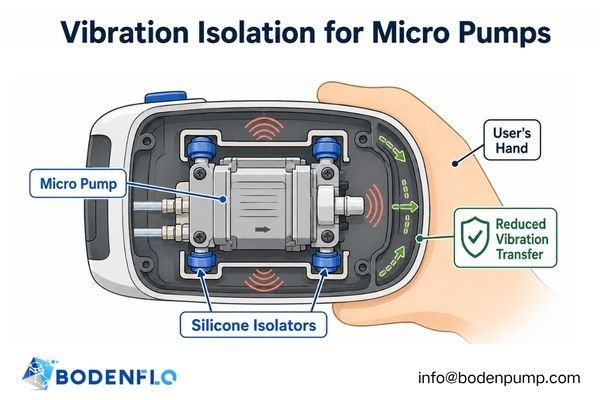
In my experience at BODENFLO, solving this requires a systems-thinking approach. A truly solid-feeling device is the result of managing vibration at every level. Here is the solution pathway I always recommend to our partners:
- Start at the Source: Select a pump engineered with a well-balanced motor and mechanism for minimal intrinsic vibration.
- Isolate with Soft Mounting: Implement soft mounting using silicone supports or rubber grommets2 to absorb and dampen the pump’s vibrations before they reach the housing.
- Design for Decoupling: Ensure the pump’s mounting points are structurally isolated from the parts of the housing that the user holds3.
This process ensures that the only thing the user feels is a solid, high-quality device, not a shaky, hollow-feeling tool.
Why Does Flow Stability Matter for the User Experience?
Your pump delivers the required flow rate on average, but if the output pulses erratically, the user will experience a jerky and unreliable product. Consistency is key to a smooth and trustworthy user experience.
Flow stability matters because it makes a device’s performance feel predictable, smooth, and trustworthy. In applications like air compression therapy or beauty treatments, stable flow provides a comfortable and controlled experience, while fluctuating flow feels jerky, unreliable, and can even be alarming to the user.
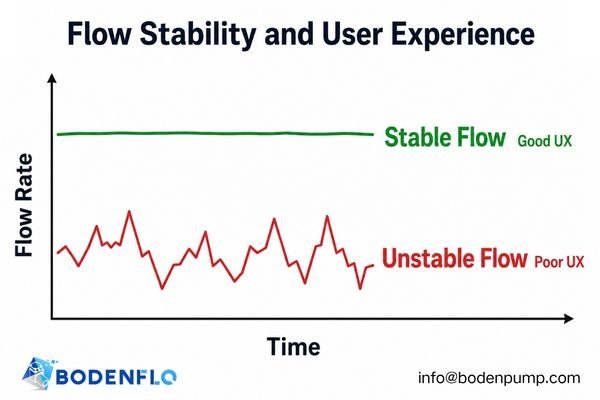
Let’s look at the real-world impact. Any fluctuation in the pump’s output is immediately noticeable and can ruin the intended experience. Consider the difference:
| Application Example | Stable Flow Experience (Good UX) | Unstable Flow Experience (Poor UX) |
|---|---|---|
| Air Compression Therapy | Smooth, gradual, comforting inflation | Jerky, alarming pulses of pressure |
| Gas Sampling Instrument | Consistent suction, enabling reliable data | Erratic suction, creating doubt in measurements |
| High-End Beauty Device | Predictable, gentle, and controlled treatment | Aggressive, uncomfortable suction |
An "average" flow rate on a datasheet is meaningless if the real-time output is unstable.4 As a project manager, I always insist that my teams test for flow stability under real-world loads, as this is the foundation of a reliable-feeling product.
How Does Response Speed Affect Product Control?
Does your device feel sluggish? A frustrating lag between a user’s action and the system’s response can often be traced back to a slow pump, making the entire product feel outdated and unresponsive.
Response speed directly affects product control by determining the delay between a user’s command and the device’s action. A fast-responding pump creates a feeling of immediate, direct control, which users associate with high performance. A slow pump introduces lag, making the product feel sluggish and frustrating.
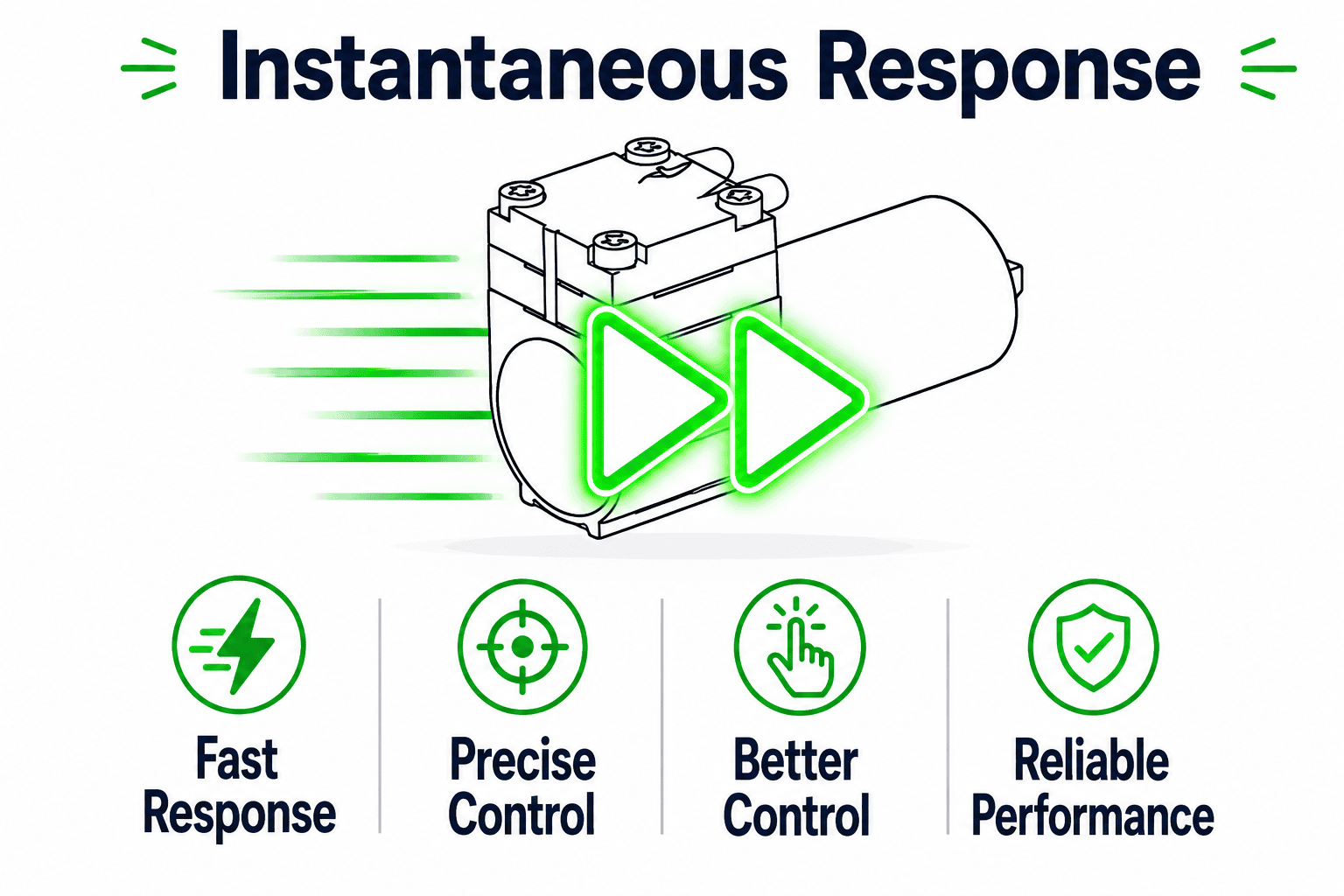
In today’s market, speed is synonymous with quality. Users expect instant results. A pump that is slow to spin up and reach its target pressure or flow can break that feeling of direct control. This is a critical factor in a growing number of applications:
- Soft Robotics: Requires rapid inflation and deflation for fluid, lifelike movement. A slow pump results in clunky, delayed motion.
- Pneumatic Control Systems: Depend on fast pressure switching for automation efficiency. A slow pump becomes a bottleneck for the entire system.
- Automated Sampling: Relies on quick suction/release cycles to maximize throughput. A slow pump reduces productivity.
- User Interface Actions: Even a basic function like releasing a suction cup must be instantaneous to avoid user frustration.
How Does Pump Heat Influence Product Safety and Comfort?
Your device works perfectly, but users are complaining that it gets uncomfortably warm to hold. This is a common issue caused by poor thermal management of the internal pump, raising user concerns about safety and comfort.
Pump heat influences product safety and comfort by raising the temperature of the device’s housing. A hot surface can make a handheld or wearable device uncomfortable to use and cause users to feel it’s unsafe or malfunctioning. Internally, excess heat also shortens the pump’s lifespan.
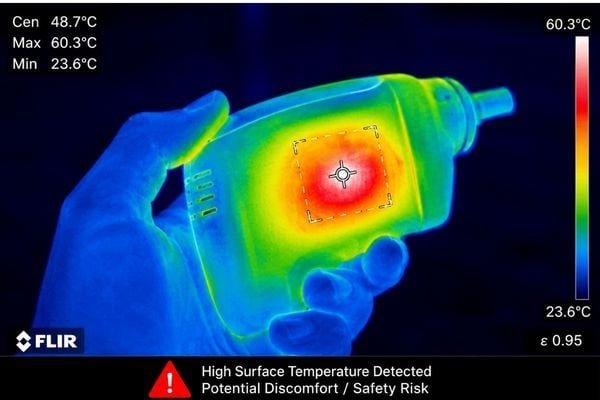
Let’s break down this risk into its three main impacts. An inefficient pump that generates too much heat creates a cascade of problems:
- User Comfort and Safety: The most immediate issue. A hot housing makes a handheld or wearable device unusable. Worse, it makes the user feel the product is dangerous or about to fail.
- Component Lifespan: Excessive heat is the primary enemy of longevity. It accelerates the degradation of the pump’s motor, seals, and diaphragm, causing it to fail prematurely.
- System Reliability: The heat generated by the pump doesn’t stay contained. It can radiate to nearby sensitive electronics on the PCB, affecting the performance and reliability of the entire system.
Managing thermals is essential risk management for any compact device5.
Why Does Pump Lifetime Affect Customer Trust?
Your marketing promises a durable, long-lasting product, but devices are being returned with "power failures" just after the warranty expires. The hidden pump’s limited lifespan has just become a direct threat to your brand’s credibility.
Pump lifetime directly affects customer trust because a pump failure is a product failure. The end user doesn’t know the pump failed; they only know the device from your brand stopped working. This premature failure is seen as a broken promise, directly eroding brand credibility and future sales.
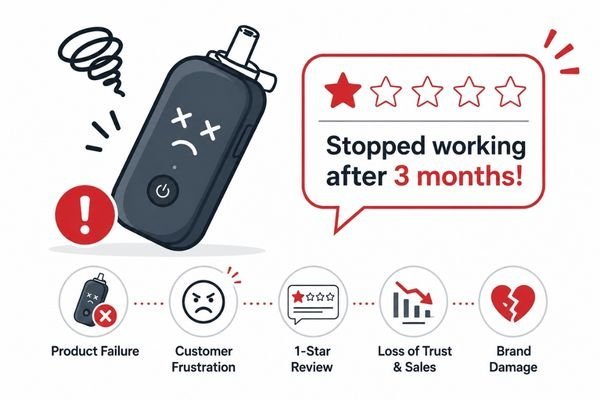
From a project management standpoint, this is the ultimate, predictable consequence of a poor component choice. Here’s the sequence of events I’ve seen play out:
- The "Cost-Saving" Choice: The team selects a low-cost brushed motor pump for an application that requires frequent or continuous use.
- The Inevitable Failure: The pump’s brushes wear out, causing performance to drop significantly or the device to fail completely.6
- The User’s Report: The user reports that the device’s "suction is weak," it "no longer works," or it "lost power."
- The Damage Done: Each incident becomes a negative review, a call to customer support, a product return, and a mark against your brand’s reputation for quality.7
This is why I always frame the choice of a long-life brushless motor not as a cost, but as a critical investment in brand trust and customer loyalty.
How Does Pump Selection Affect After-Sales Cost?
Have you calculated the true cost of that "cheap" pump? As a project manager, I see the financial fallout when teams select components based on upfront price alone, leading to a surge in after-sales costs that destroy profit margins.
A poor pump selection dramatically increases after-sales costs through higher rates of product returns, warranty claims, and customer support tickets. These direct expenses, combined with the indirect cost of negative reviews and brand damage, often make the "cheapest" pump the most expensive component in the long run.
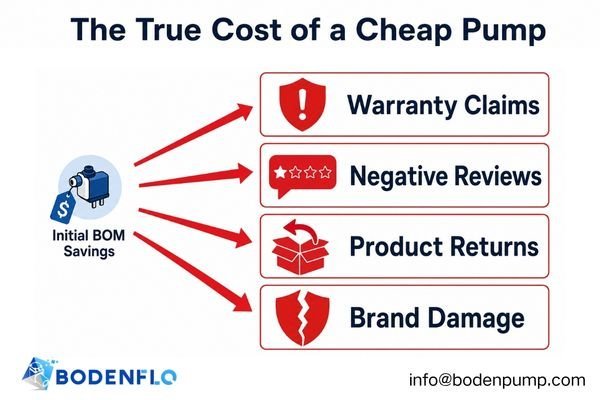
This is a B2B conversation that needs to happen early in the design phase. A poor pump choice creates a financial black hole. I have seen firsthand how it leads to:
- A spike in product returns (RMAs).
- An overwhelmed customer support team handling complaints.
- An increase in warranty claims, hitting the bottom line directly.
- Negative online reviews that deter new customers.
- Pressure from distributors who have to deal with angry clients.
- Costly emergency redesigns and re-tooling to fix the problem.
These are not engineering problems; they are business problems. Choosing a reliable, high-quality pump is one of the most effective ways to protect your bottom line from these predictable and preventable costs.
Which Pump Features Improve End-Product User Experience?
Struggling to translate user feedback into engineering specs? To build a better product, your team must connect abstract experience goals to concrete pump features. This is the bridge between what the user wants and what the engineer needs to specify.
To improve user experience, focus on specific pump features like a low-noise motor, a balanced design for low vibration, and a brushless motor for long life. These technical choices directly translate into the quiet, smooth, and reliable performance that users perceive as high quality.
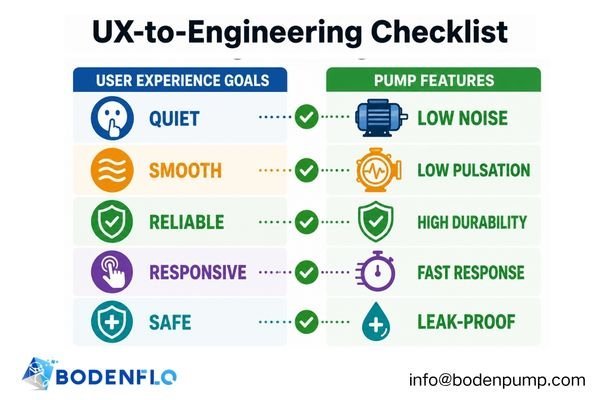
Use this table as a practical guide during your selection process. It ensures that every technical decision is made with the end user in mind, turning vague goals into an actionable checklist.
| User Experience Goal | Pump Feature to Check | Why It Matters for the User |
|---|---|---|
| Quiet Operation | Low-noise motor & balanced structure | Reinforces a perception of high quality and makes the device less intrusive and more professional. |
| Comfortable Feel | Low-vibration design & shock absorption | Reduces unpleasant buzzing in handheld devices, improving comfort and the feeling of precision. |
| Smooth Performance | Stable flow & consistent pressure output | Makes the device feel reliable, predictable, and well-controlled during every use. |
| Instant Response | High motor acceleration & suitable flow | Eliminates frustrating lag, creating a feeling of direct, responsive control over the device. |
| Long-Term Reliability | High-end brushless or coreless motor | Prevents early product failures, builds brand trust, and reduces negative customer reviews. |
What Applications Are Most Sensitive to Pump User Experience?
Does every application need a silent, zero-vibration pump? Not always. The key is to understand the specific priorities for your target market and choose a pump that delivers the experience your users value most.
Applications like medical therapy devices, beauty instruments, and smart home appliances are most sensitive to pump user experience. In these contexts, low noise, low vibration, and stable performance are not just features—they are core requirements for customer satisfaction, safety, and perceived quality.
A mismatch between pump features and application priorities is a common source of failure. A pump perfect for an industrial tool would be disastrous in a medical device. Here’s a quick guide I use to help teams align their pump selection with the user experience priorities of their specific application. This ensures that engineering effort and cost are invested in the features that will have the biggest impact on customer satisfaction.
| Application | Top User Experience Priority | Key Pump Requirement |
|---|---|---|
| Medical Therapy Devices | Quiet, comfortable, and reliable operation | Low noise, stable pressure, long-life brushless motor8 |
| Beauty Instruments | Smooth suction, low vibration, quiet feel | Stable flow, low vibration, low noise |
| Smart Home Appliances | Unobtrusive, low background disturbance | Quiet and compact pump design |
| Portable Analyzers | Reliable and repeatable sampling | Stable vacuum, consistent flow, long life |
How Can OEM Teams Select Pumps with User Experience in Mind?
Ready to move beyond datasheets and select a pump that truly enhances your product? Your team needs a hands-on evaluation process that simulates the real-world user experience. A pump’s performance on paper is useless if it fails in practice.
OEM teams should select pumps by testing them inside the actual product housing. This allows for realistic evaluation of noise resonance, vibration transfer, thermal buildup, and flow stability under real-world loads, revealing issues that datasheets alone cannot predict.
I insist on this practical validation checklist for any project I manage. It’s designed to catch potential user experience issues long before your product reaches mass production, saving time, money, and your brand’s reputation.
The Hands-On Pump Evaluation Checklist:
- Test Noise Inside the Final Housing: Listen for resonance that you won’t find on a datasheet.
- Measure Vibration After Installation: Feel how much vibration transfers to the parts the user holds.
- Check Flow Stability Under Real Load: Use your actual tubing, filters, and valves.
- Evaluate Heat During Full Duty Cycles: Measure temperature on the housing.
- Confirm Lifespan Matches User Behavior: Don’t just meet the warranty; meet the user’s expectation.
- Prototype Mounting and Isolation Early: Test shock absorption methods.
How Can BODENFLO Support a Better End-Product Experience?
Knowing that the pump is critical is the first step. The next is finding a partner who not only understands this but has the expertise and technology to help you build a superior product.
BODENFLO supports a better end-product experience by acting as an expert partner, not just a supplier. We help OEM teams select the right micro pump and customize its parameters to meet specific user experience goals for noise, vibration, stability, and lifespan.
At BODENFLO, our goal is to be an extension of your engineering team. We understand that a successful integration is about matching our pump technology to your end-user’s needs. We achieve this by providing:
- An extensive portfolio of micro air pumps, vacuum pumps, and liquid pumps.
- A clear choice between economical brushed and long-life brushless motor options.
- Pump designs engineered for compact structures, low noise, and low vibration.
- OEM parameter customization to fine-tune performance for your specific application.
- Expert application-based pump matching and hands-on vibration reduction support.
If you’re developing a device where the user experience is paramount, we have the expertise to help you succeed.
Contact our engineering team to start the conversation: 📩 info@bodenpump.com.
Conclusion
The micro pump is an invisible component with a highly visible impact. Prioritizing its noise, vibration, stability, and lifespan is not a cost—it’s a direct investment in user experience and brand trust.
-
"How to Reduce Noise & Vibration in Micro Pumps – 10 FAQs", https://bodenpumpstore.com/blogs/news/reduce-noise-vibration-micro-pumps?srsltid=AfmBOopYA0p7J_wwxGlrYo0b50cqn_6xa60j6otznGSR9c3HmcmNjJQU. Acoustic engineering studies have shown that hollow plastic enclosures can exhibit resonance effects, amplifying internal device noise and sometimes producing high-frequency tonal sounds, supporting the described mechanism. Evidence role: mechanism; source type: research. Supports: the housing acts like a speaker, amplifying the noise and creating an annoying, high-pitched whine.. Scope note: The studies focus on general enclosure acoustics and may not address every specific pump or housing design. ↩
-
"TOP 16 Ultimate Anti-Vibration Guide For Micro Pumps – bodenflo", https://bodenpump.com/top-16-ultimate-anti-vibration-guide-for-micro-pumps/. Engineering literature supports the use of rubber grommets and silicone supports for vibration isolation, as these materials can absorb and dampen mechanical vibrations in pump assemblies. However, the effectiveness depends on material properties and specific application context. Evidence role: mechanism; source type: education. Supports: Implement soft mounting using silicone supports or rubber grommets to absorb and dampen the pump’s vibrations before they reach the housing.. Scope note: Effectiveness varies with material selection and mounting design. ↩
-
"Vibration isolation – Wikipedia", https://en.wikipedia.org/wiki/Vibration_isolation. Research in ergonomic device design indicates that structural isolation of vibration sources from user-contact surfaces reduces perceived vibration and improves user comfort. This principle is widely applied in handheld tool engineering, though implementation details may vary. Evidence role: mechanism; source type: research. Supports: Ensure the pump’s mounting points are structurally isolated from the parts of the housing that the user holds.. Scope note: Implementation effectiveness depends on device geometry and isolation method. ↩
-
"What Does Stable Flow Mean in Micro Pumps? 10 Engineering FAQs", https://bodenpumpstore.com/blogs/news/what-does-stable-flow-mean-in-micro-pumps?srsltid=AfmBOor2HTKglFH9ZLm-CtEbkJrNoFSS4HLt13rVTPxYm3gRmFhVwZ5_. A technical review of fluid dynamics in pump systems explains that average flow rate values may not reflect real-time performance, as fluctuations can significantly affect application outcomes. Evidence role: mechanism; source type: education. Supports: An "average" flow rate on a datasheet is meaningless if the real-time output is unstable.. Scope note: The review discusses general principles and may not address every specific application context. ↩
-
"Risk management in the design of medical device software systems", https://pubmed.ncbi.nlm.nih.gov/12162111/. Industry guidelines and engineering standards emphasize thermal management as a critical factor in the design and reliability of compact electronic devices. Evidence role: expert_consensus; source type: institution. Supports: Managing thermals is essential risk management for any compact device.. Scope note: Guidelines may not address every specific device type, but broadly apply to compact electronics. ↩
-
"Common Problems & Maintenance of Brushed DC Motors", https://northendelectric.com/2024/10/15/common-problems-maintenance-of-brushed-dc-motors/. A technical review of brushed motor pumps confirms that brush wear is a common failure mode, leading to reduced performance and eventual device failure. Evidence role: mechanism; source type: education. Supports: The pump’s brushes wear out, causing performance to drop significantly or the device to fail completely.. Scope note: The review addresses general pump applications and may not cover all specific use cases. ↩
-
"The impact of online reviews in the presence of customer returns", https://www.sciencedirect.com/science/article/abs/pii/S092552732030284X. Consumer product studies indicate that device failures often result in negative reviews, increased customer support interactions, and product returns, which can impact brand reputation. Evidence role: statistic; source type: research. Supports: Each incident becomes a negative review, a call to customer support, a product return, and a mark against your brand’s reputation for quality.. Scope note: Studies typically analyze broader consumer electronics and may not focus exclusively on pumps. ↩
-
"Medical Diaphragm Pumps in Real Clinical Use — 10 FAQs", https://bodenpumpstore.com/blogs/news/medical-diaphragm-pumps-real-clinical-use-10-faqs?srsltid=AfmBOoqDAb3OCelN7w_EQrSNGztOYP7p6hd66785SuhaqKj6j01vcUUp. Technical guidelines for medical device pumps emphasize the importance of low noise, stable pressure, and long-life brushless motors to ensure patient comfort and device reliability. Evidence role: expert_consensus; source type: institution. Supports: Medical therapy devices require pumps with low noise, stable pressure, and long-life brushless motors to meet user experience priorities.. Scope note: Guidelines may vary by region and device type, so recommendations are not universally applicable. ↩