
Why Do Medical Devices Prefer Oil-Less Mini Compressors Over Traditional Compressors?
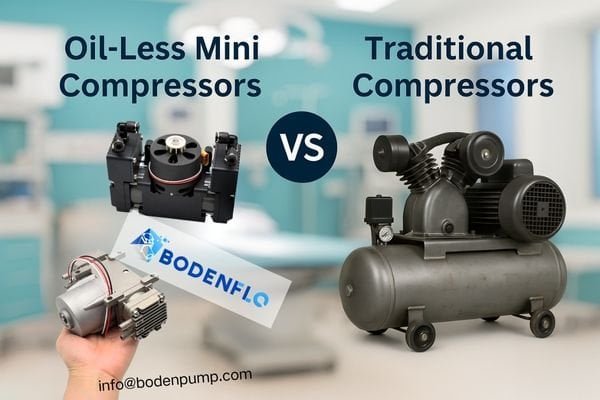
Medical devices need clean, reliable air. Traditional compressors risk oil contamination, threatening patient safety and device integrity. Oil-less mini compressors offer a safe, pure, and dependable solution for modern medical equipment. Medical devices prefer oil-less mini compressors because they guarantee 100% oil-free air, eliminating contamination risks to patients, sensitive sensors, and pneumatic valves. This ensures […]
High Vacuum vs High Flow Vacuum Pump: What Engineers Need to Know Before Choosing
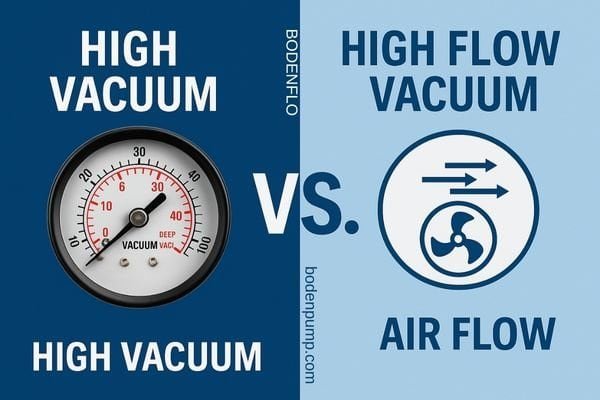
Your system needs better suction performance, but should you choose a high vacuum or a high flow vacuum pump? Making the wrong choice can lead to failed prototypes, wasted budget, and project delays. The best choice depends on your application’s primary goal. High vacuum pumps excel at creating deep negative pressure for sealing or analysis, […]
What Vacuum Level Do You Really Need? Understanding Working Vacuum vs. Max Vacuum
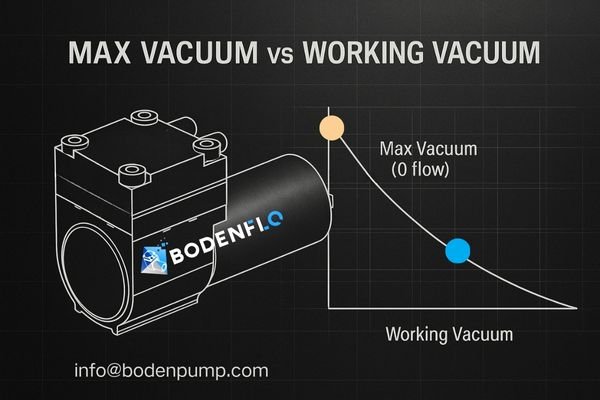
Your team selected a micro pump with a powerful -90 kPa rating on the datasheet, but in your system, it barely pulls -60 kPa. Now your device is failing performance specs, and the project is at risk. This common mistake comes from confusing "Max Vacuum" with "Working Vacuum." The vacuum level you really need is […]
Gas Sampling Systems: What Pre-Treatment Your Micro Pump Actually Needs?
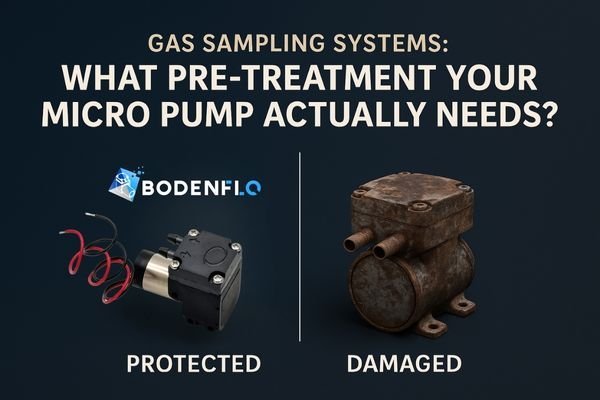
Your new gas analyzer is giving erratic readings, and worse, the micro pump inside has failed prematurely. You suspect the sample gas is the culprit, but you’re unsure what kind of pre-treatment is truly necessary to protect your system. Gas pre-treatment is non-negotiable for system accuracy and longevity. Properly filtering particles, removing moisture, and ensuring […]
What Is the Best Ink Pump for Industrial Inkjet Printers — Diaphragm or Gear Pump?
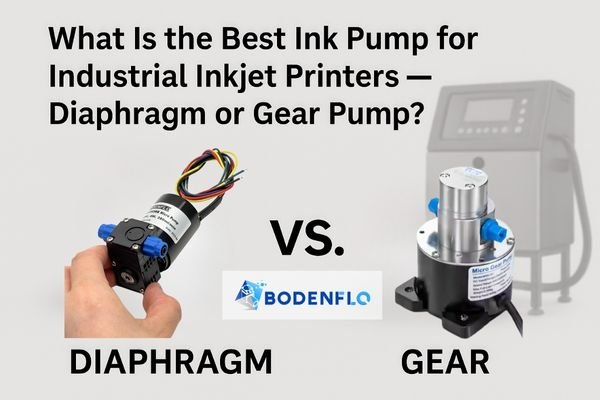
Choosing the wrong ink pump for your industrial inkjet printer can lead to costly print defects, frequent downtime, and wasted ink. This critical decision between a diaphragm and gear pump feels like a high-stakes choice with little clear guidance. The best ink pump is application-specific: Diaphragm pumps excel with low-viscosity, chemically sensitive inks used in […]
What’s the Hidden Engineering Behind Quiet Micro Pumps?
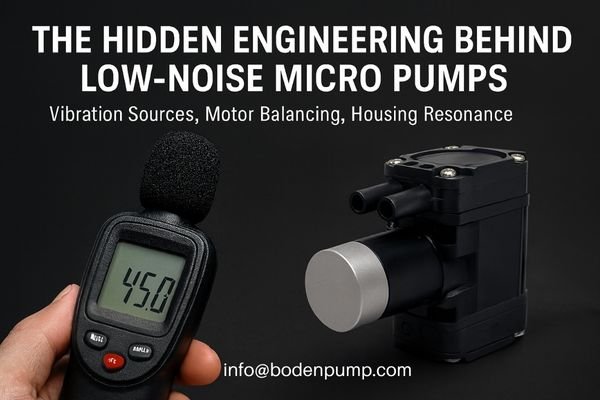
Your device is perfect, but the pump noise is driving users crazy. This constant buzzing and vibration can ruin the user experience and make your product seem cheap. Low-noise micro pumps achieve quiet operation by addressing three key areas: minimizing internal vibration, precisely balancing the motor to reduce eccentric motion, and designing the housing to […]
Why High-Pressure Micro Diaphragm Pumps Wear Faster — And How Low-Pressure Design Solves It
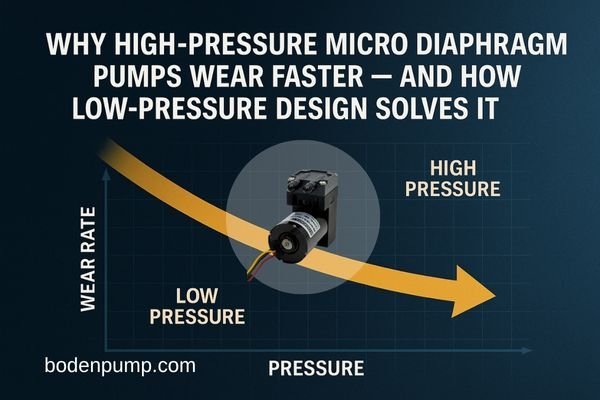
Tired of replacing your micro diaphragm pumps? High pressure creates intense heat and stress, causing premature failure. A low-pressure design offers a simple, effective solution that saves you money. High-pressure micro diaphragm pumps wear faster because they force the motor, diaphragm, and valves to work harder. This increases mechanical stress and generates excessive heat. Switching […]
Why Does My BLDC Micro Pump Not Respond to PWM Control?

Your BLDC micro pump project is stalled. The pump sits there, ignoring your PWM signals. It’s frustrating when precise control is the goal but nothing happens. Your BLDC micro pump may not respond to PWM control due to incorrect signal specifications (voltage, frequency, duty cycle), faulty wiring, an inadequate power supply, or a damaged internal […]
How Does PWM Duty Cycle Translate into Micro Pump Flow and Pressure?

Need precise control over your micro pump’s output? Simple voltage changes are inefficient and can harm the motor, leading to poor performance and a shorter lifespan for your product. Pulse Width Modulation (PWM) duty cycle directly controls the average power delivered to your micro pump’s motor. A higher duty cycle increases motor speed, resulting in […]
Can a Micro Diaphragm Air Pump Hold Pressure After Power Off?

Is your system losing pressure the moment your pump switches off? This common issue can ruin a project, as the pressure drop is often faster than you’d expect. The only real solution lies outside the pump itself. The short answer is no; a standard micro diaphragm air pump cannot hold pressure after being powered off. […]
How Do I Solve Advanced EMI/EMC Issues in High-Load Micro Air Pump Applications?

Standard EMI filtering isn’t enough, and your industrial device is still failing EMC. High-load brushed motors in your micro air pumps create complex noise that disrupts sensitive controls, threatening your project’s viability. To solve advanced EMI in micro air pumps, you must attack the noise at its source. This involves integrating internal motor suppression components […]
How Does a Low-Pressure Mini Diaphragm Pump Work, and What Defines Its Performance?
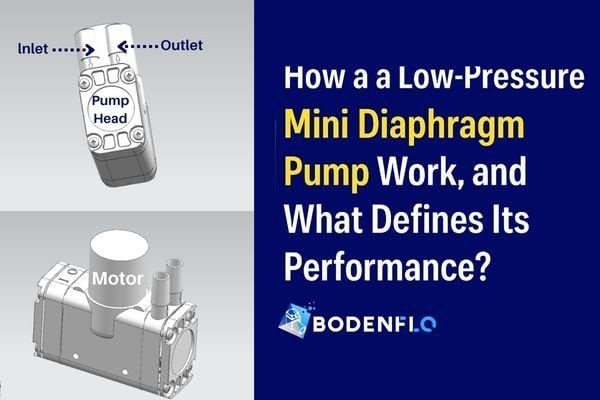
Selecting the wrong pump can cause project delays and system failures. You need a component that meets precise technical requirements. We’ll detail the working principles and quantifiable performance metrics. A low-pressure mini diaphragm pump utilizes a DC motor-driven eccentric cam to actuate a diaphragm, creating pressure and vacuum. Its performance is defined by quantifiable parameters: […]